
Meta Quest 4 Specs Leaks Features and Expected Upgrades
Meta Quest 4 specs are not final yet, but the strongest expectations still point in a familiar direction: better performance improvements, cleaner passthrough, stronger mixed reality features, lighter comfort, and smarter refinement across the headset rather than a dramatic break from Meta’s recent hardware strategy. The key is to separate believable upgrades from noisy rumor inflation.
Meta Quest 4 specs are still being discussed through leaks, prediction threads, and broader hardware expectations, but the useful question is not whether every rumor sounds exciting. It is whether the expected upgrades fit where Meta and the VR market are actually heading. In April 2026, the most credible pattern still points toward a more polished next-generation headset with practical improvements, not a fantasy jump detached from the current ecosystem.
That matters because buyers often confuse possibility with probability. A stronger chip is plausible. Better passthrough is plausible. More polished mixed reality features are highly plausible. But extreme claims without platform logic behind them deserve skepticism, especially when Meta still has reasons to keep Quest 3 relevant through software and content momentum. It also helps to understand the difference between VR, AR, and MR when judging what mixed reality upgrades would actually matter.
For the broader story that connects specs, release timing, and April 2026 industry context, start with the pillar article on Meta Quest 4 release date, specs, and latest news April 2026. If your main question is timing rather than hardware, the release date article is the better companion piece.
For authoritative background, see Meta Quest 3 official page, Meta Quest official blog, and Qualcomm XR platform overview.
What Do the Current Leaks Suggest?
Most current leaks point less toward one shocking headline feature and more toward layered improvement. That is usually how meaningful headset progress works. A device becomes easier to wear, easier to trust, and more capable in areas like spatial awareness, passthrough quality, rendering efficiency, and battery behavior. None of those upgrades sounds flashy on its own, but together they can define a real generation shift.
That is why the most credible Meta Quest 4 specs conversations tend to center on engineering priorities rather than marketing fantasy. Meta needs a headset that feels immediately better while also supporting the long-term ecosystem evolution it has been pushing through mixed reality and broader platform design.
Most Likely Meta Quest 4 Specs
The most likely Meta Quest 4 specs are best understood as a package of refinement. A faster processor would support better rendering, smoother mixed reality, and more breathing room for developers. Improved cameras and passthrough would make blended experiences more convincing. Comfort and balance changes would matter just as much because long-term adoption depends on how a headset feels after more than ten minutes of use.
| Spec Area | Likely Upgrade | Why It Matters | Confidence |
|---|---|---|---|
| Processor | Faster and more efficient chipset | Supports performance improvements and longer platform headroom | Medium to high |
| Passthrough | Cleaner and more useful camera view | Helps mixed reality features feel practical rather than experimental | High |
| Design and comfort | Lighter build or better balance | Critical for longer sessions and broader appeal | Medium |
| Displays | Sharper clarity and more polished optics | Improves visual quality and perceived premium value | Medium |
| Tracking and spatial behavior | More stable environmental awareness | Strengthens room-aware interaction and ecosystem growth | Medium |
These are not guaranteed specs. They are the most realistic expectations if Meta wants its next-generation headset to feel clearly better without overpromising what the market is not ready to support yet.
Why Do Mixed Reality Features Matter Most?
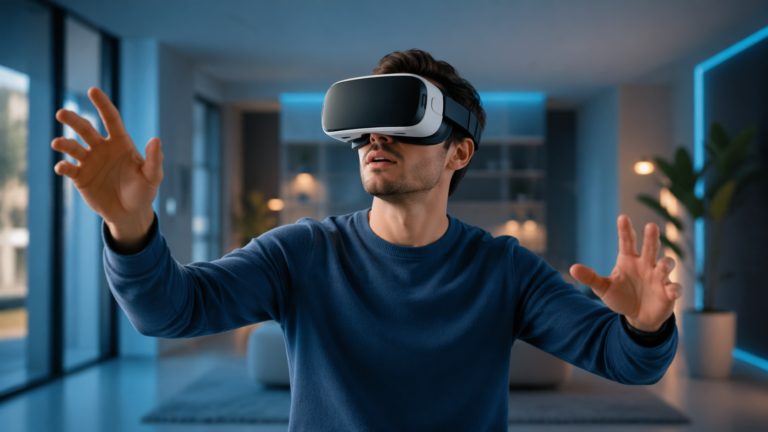
If there is one area that defines the most plausible Meta Quest 4 upgrade path, it is mixed reality features. Meta has already signaled that passthrough, spatial interaction, and digital content that behaves more naturally in the real world are central to its long-term strategy. That makes mixed reality more than a side feature. It becomes one of the main reasons a new headset would exist at all.
In practical terms, better mixed reality means a clearer passthrough image, more stable digital placement, stronger spatial awareness, and fewer moments where the illusion breaks. Those upgrades matter not only for entertainment but also for productivity, setup, navigation, and everyday utility.
This is also where Quest 3 firmware becomes relevant. Ongoing software refinement helps show which features Meta believes deserve long-term investment. That is why our Quest 3 firmware April 2026 article fits naturally into this specs conversation.
Realistic Expectations vs Weak Rumors
The easiest mistake in VR hardware coverage is to treat every possible feature as equally probable. That is not how good forecasting works. Realistic expectations are built from product direction, software priorities, platform strategy, and the simple question of whether an upgrade helps Meta tell a better market story.
Weak rumors usually lack that structure. They sound dramatic, but they do not explain why the feature makes sense in the broader ecosystem. A good example is any claim that feels disconnected from what Meta is already improving across software, passthrough, and user experience. Without that continuity, hype is cheap.
Should You Wait for These Upgrades?
That depends on how much the rumored improvements matter to you personally. If you care most about stronger mixed reality features, longer-term platform headroom, and a more future-facing design, waiting for Meta Quest 4 specs to become clearer is reasonable. If you mainly want a strong headset right now, current devices may still be the better decision.
Buyers should avoid one trap: delaying a purchase because imagined specs feel emotionally real even when they are not confirmed. Waiting works best when you are comfortable with uncertainty and you know exactly what upgrade you are holding out for.
What to Do With the Current Specs Story
- Treat Meta Quest 4 specs as directional, not final.
- Focus on believable hardware refinement instead of dramatic rumor spikes.
- Watch mixed reality features closely because they are the clearest sign of next-generation intent.
- Use the pillar and release-date articles to keep the hardware discussion grounded in timing and market context.
Frequently Asked Questions
Have Meta Quest 4 specs been confirmed?
No. Meta has not released a final public specs sheet for Meta Quest 4, so current details remain in the leaks and expectations phase.
What upgrades are most likely for Meta Quest 4?
The most likely upgrades include a faster chipset, better passthrough, stronger mixed reality features, improved comfort, and more polished visual clarity.
Will Meta Quest 4 have better mixed reality features?
That is one of the strongest expectations because Meta’s product direction increasingly emphasizes passthrough, spatial interaction, and blended computing experiences.
Could Meta Quest 4 improve battery life and comfort?
Yes, those are realistic areas for improvement because long-session comfort and efficiency are both important to next-generation headset adoption.
Should buyers wait for better Meta Quest 4 specs?
Only if future hardware features matter more to you than buying a capable headset right now. Otherwise, current options may still offer enough value.