Best Haptic Gloves for VR and What They Actually Do
The best haptic gloves for VR focus on different goals, from realistic force feedback to practical training workflows and high-precision hand tracking.

Emerging research, prototypes, experimental systems, and technical breakthroughs in XR.
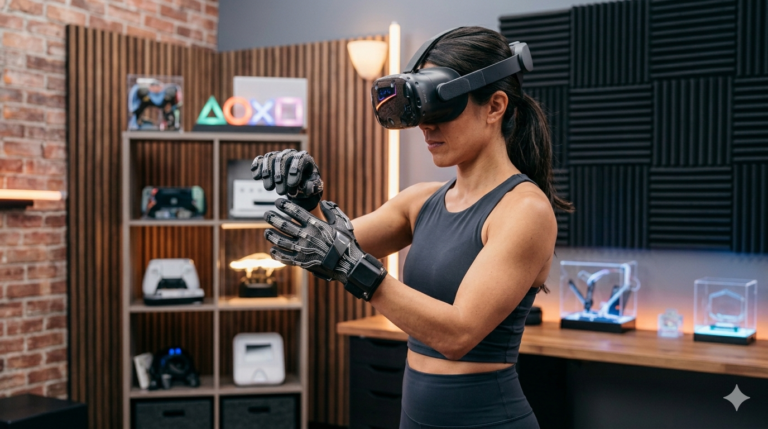
The best haptic gloves for VR focus on different goals, from realistic force feedback to practical training workflows and high-precision hand tracking.

VR can simulate parts of touch through haptic feedback, force cues, vibration, pressure, and thermal research, but it still cannot fully recreate natural human touch.
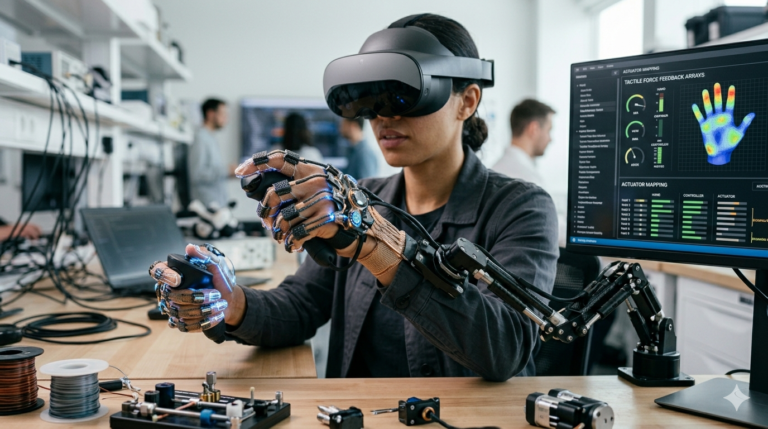
Haptic feedback works in VR by turning digital events into vibration, pressure, resistance, or force cues that make virtual interaction feel physical.
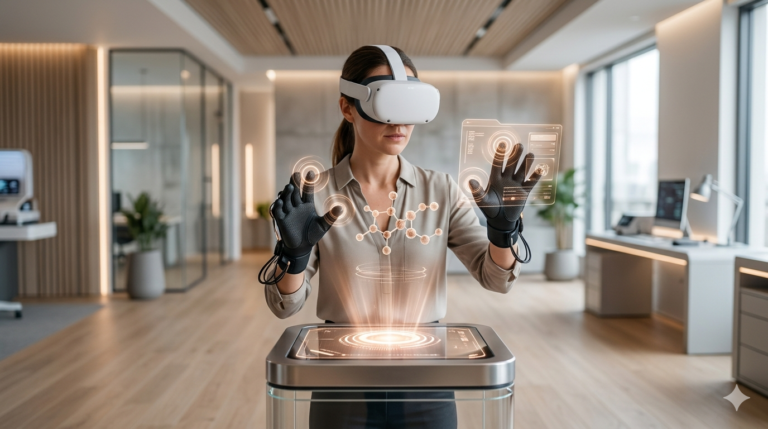
The types of haptic feedback range from simple vibration to advanced force, texture, and wearable systems that make digital interactions feel more physical.
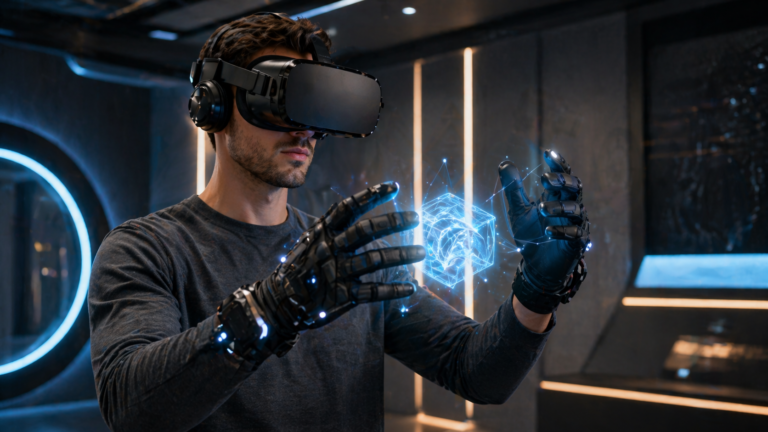
Haptics in virtual reality add touch, vibration, resistance, and tactile feedback to make digital experiences feel more physical, immersive, and useful.
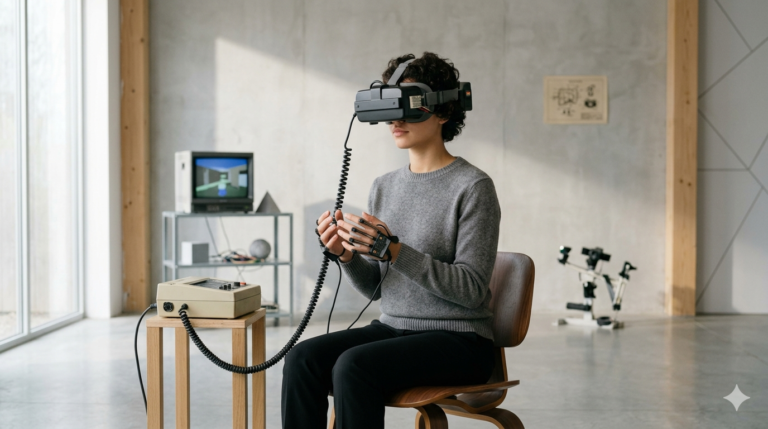
Virtual reality was not invented by one person alone. It evolved through decades of experimentation by filmmakers, computer scientists, engineers, and hardware pioneers who gradually turned immersive simulation into modern VR.