Can VR Simulate Touch The Future of Haptic Feedback
Updated 2026-05-01 by HapVR
Yes, virtual reality can simulate parts of touch by using haptic feedback such as vibration, pressure, resistance, and motion cues. It can make digital objects feel more convincing, but current systems still fall short of recreating full human touch with perfect texture, temperature, and natural force response.
Can virtual reality simulate touch? Yes, but only partially with current hardware. VR can create the sensation of impact, vibration, pressure, and resistance through haptic feedback devices, which helps users feel more connected to virtual objects and actions. That is the clearest answer for anyone asking whether digital touch is already possible today.
The future of haptic feedback is about closing the gap between believable sensation and real physical touch. Better gloves, more precise actuators, and smarter software are pushing VR beyond visual immersion alone. If you already understand what haptics in VR are, this article answers how far that technology can realistically go and why it connects to the broader shift toward spatial computing.
For authoritative background, see Microsoft haptic feedback guidance, Apple Core Haptics documentation, and Meta Reality Labs haptic glove research.
Can VR Simulate Touch Right Now?
VR can simulate touch well enough for many games, training apps, and research systems. It can tell your brain that an action happened, that contact was made, or that resistance exists. In many cases, that illusion is enough to make a digital object feel believable, even when the actual physical signal is simple.
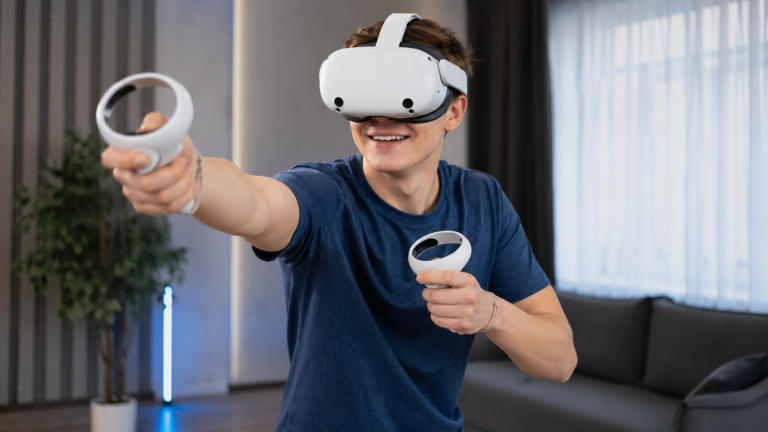
Most commercial systems do this with controllers. More advanced setups use gloves or body-worn haptics to add finger pressure, hand contact, or impact cues. These systems are improving quickly, but they still translate touch into selected signals rather than reproducing the full richness of human skin and muscle sensation.
Why Simulating Touch in VR Is Hard
Human touch is extremely complex. Your skin can detect pressure, vibration, texture, stretch, and temperature at the same time. Your muscles and joints also contribute information about position, weight, and resistance. A convincing VR system has to coordinate several of those signals while keeping the timing perfectly matched to what the user sees.
That complexity is why touch has remained one of the hardest frontiers in immersion. Visual VR can already be convincing with strong displays and tracking, as explained in what virtual reality is. Touch is harder because the body notices missing detail very quickly once an object looks real but does not feel right.
The good news is that haptic systems do not always need to copy every sensation. The brain often fills in missing detail when the cue arrives at the right time. That is why even basic rumble can feel surprisingly effective in a well-designed VR scene.
How VR Simulates Touch Today
1. Vibration and Impact Cues
The most common answer to can VR simulate touch comes from controller rumble. Short pulses, clicks, and impact patterns tell your hands when something has been grabbed, fired, dropped, or hit. This is simple compared with real touch, but it works because the feedback arrives at the exact moment your eyes expect contact.
Pros
- Affordable and widely supported
- Very effective for timing and impact
- Easy for developers to integrate
Cons
- Cannot represent texture or true force
- Feels generalized rather than realistic
2. Haptic Gloves and Finger Feedback
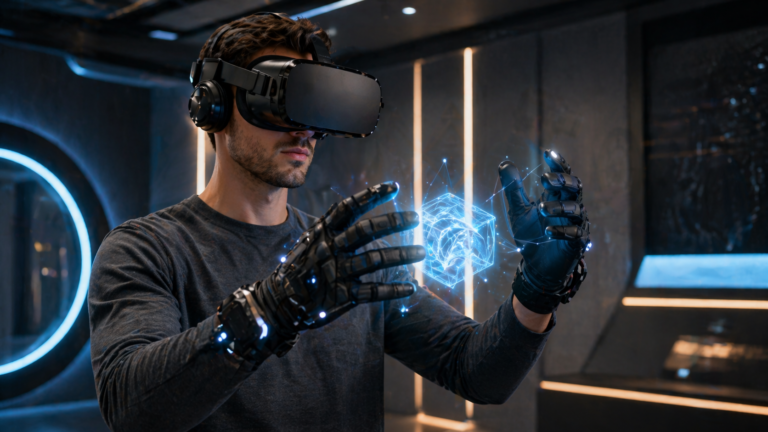
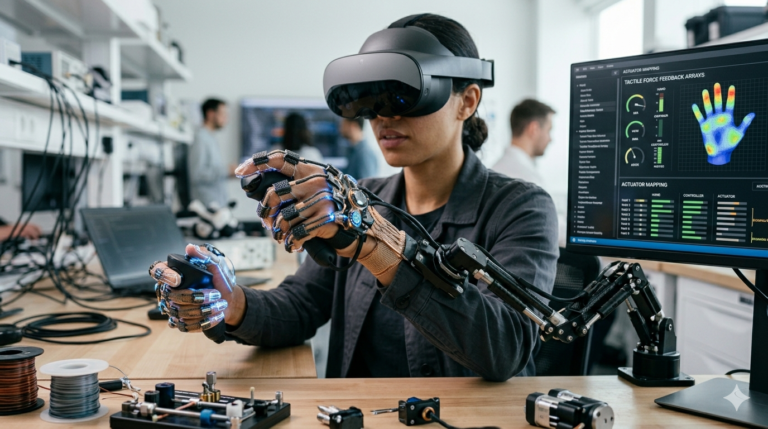
Haptic gloves are one of the clearest signs of the future of haptic feedback. They try to simulate grasp, pressure, finger contact, or resistance when you pick up a virtual object. Some use vibration motors, while others use mechanical braking or force systems to stop finger movement and create a more convincing sense of shape.
Pros
- More natural than controller-only interaction
- Supports detailed hand presence
- Better suited for training and simulation
Cons
- Still expensive and limited
- Not yet fully realistic for all touch cues
3. Vests, Suits, and Force Cues
Some systems move beyond the hands and simulate touch on the torso or arms. Haptic vests, shoulder modules, and wearable bands can create taps, recoil, directional hits, or environmental cues. These do not make a user feel exact texture, but they help the body accept the scene as more physically present.
Pros
- Adds presence beyond hand interaction
- Useful for action, fitness, and simulation
- Can strengthen emotional immersion
Cons
- Bulky compared with controllers
- Still focused on broad cues rather than detailed touch
What the Future of Haptic Feedback Looks Like
The future of haptic feedback is likely to combine several layers at once. Instead of just vibrating, next-generation systems may coordinate fingertip pressure, motion resistance, skin stretch, and even thermal cues. When that happens, VR experiences could move from suggesting contact to delivering much richer physical illusions.
This is also where haptics connect to broader research in robotics and sensory interfaces. Developers are learning that good touch simulation depends on both hardware and software. It is not only about stronger devices. It is about understanding how the body interprets timing, movement, and expectation together. That is why articles like types of haptic feedback matter when evaluating where the field goes next.
Where Better VR Touch Matters Most
Gaming gets most of the attention, but touch simulation matters just as much in training and professional use. Medical rehearsal, industrial maintenance, robotics training, and remote collaboration all benefit from better physical cues. When a user can feel resistance or contact, they often move with more confidence and precision.
That same improvement can also make social and creative VR more engaging. Hand presence becomes more believable, object manipulation becomes more intuitive, and virtual environments feel less like floating visual scenes. The better the touch layer becomes, the less users have to mentally compensate for what is missing.
What VR Still Cannot Recreate Well
Current VR still struggles with fine texture, exact weight, realistic softness, and full temperature response. Even strong haptic systems often feel more like cues than true material simulation. That does not make them useless. It just means the technology is still in the stage of partial realism rather than complete sensory reproduction.
So can VR simulate touch? Yes, enough to improve immersion in meaningful ways. But the most honest answer is that modern VR simulates useful touch signals, not perfect physical reality. The future of haptic feedback is promising because each generation gets better at narrowing that gap.
| System Type | What It Simulates | Best Strength | Main Limitation |
|---|---|---|---|
| Controller vibration | Impact, contact timing, simple feedback | Fast and reliable cues | Cannot reproduce detailed texture or force |
| Haptic gloves Best Current Path | Finger contact, grip, resistance | Natural hand interaction | Cost and hardware complexity |
| Wearable suits or vests | Body hits, directional cues, presence | Whole-body immersion | Not precise enough for fine touch |
| Experimental multisensory systems | Pressure, temperature, richer sensation | Future research potential | Not mainstream yet |
What Can VR Touch Realistically Deliver Right Now?
- Expect convincing cues, not perfect realism.
- Controllers remain the most practical haptic solution for mainstream VR.
- Haptic gloves are the strongest path toward believable hand interaction.
- Body-worn haptics improve presence even when touch detail is still limited.
- The future depends on combining better hardware, software timing, and sensory science.
Frequently Asked Questions
Can virtual reality really simulate touch?
Yes, current VR systems can simulate selected touch cues rather than full natural touch. They are strongest at vibration, impact, resistance, and timed contact signals.
How does haptic feedback create the feeling of touch in VR?
Haptic feedback uses motors, actuators, or force systems to send physical signals to the hands or body at the same moment a virtual interaction happens.
Are haptic gloves better than VR controllers for touch?
Haptic gloves can feel more natural because they follow finger movement directly, but controllers are still more practical, cheaper, and more widely supported.
Can VR simulate texture and temperature?
Only in limited experimental ways today. Some research systems explore temperature and surface cues, but mainstream VR still cannot recreate texture and heat with high realism.
Why is simulating touch harder than simulating sight in VR?
Touch depends on many simultaneous signals, including pressure, stretch, texture, temperature, and body position. Recreating all of that with precision is much harder than rendering convincing visuals.
What industries care most about VR touch technology?
Training, healthcare, robotics, industrial simulation, and advanced gaming all benefit from stronger haptic systems because touch improves realism and control.
Will future VR systems feel like real physical objects?
They may get much closer, especially with better gloves and force feedback, but fully matching natural touch in every situation is still a long-term challenge.
Does better haptic feedback reduce immersion problems?
Better haptics can improve presence and make interactions feel more believable, although it does not solve every comfort or motion issue in VR.