What Are Haptics in Virtual Reality and Why They Matter
Updated 2026-04-25 by HapVR
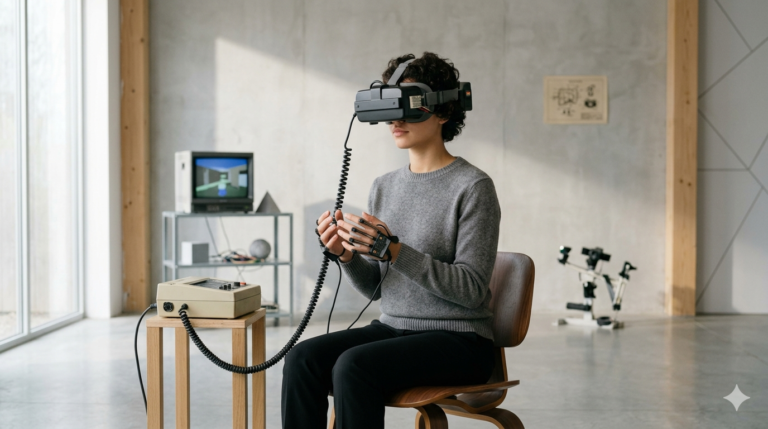
Haptics in virtual reality are touch-based signals that make digital interactions feel more physical. In VR, haptic feedback can use vibration, pressure, resistance, motion, or force to simulate contact, texture, impact, or movement so the experience feels more believable and easier to understand.
When people first try virtual reality, they usually notice the visuals and the sound. What often comes next is a more practical question: why does the experience still feel incomplete even when the environment looks convincing? The answer is often touch. Without physical feedback, many virtual actions feel like gestures in empty space instead of believable interaction.
That is where what are haptics becomes an important question. Haptics help virtual reality move beyond sight and sound by adding tactile feedback, resistance, and motion cues. In simple terms, they make digital interaction feel more grounded. In practical terms, they improve realism, training value, comfort, and user confidence. That is also why people asking can VR simulate touch usually end up learning about haptics first.
If you want the broader context first, read our overview of what virtual reality is and then compare the best VR headsets to see where haptic features fit into real buying decisions.
For reliable background, see Britannica’s overview of haptics, Microsoft’s haptic feedback guidance, and Apple’s Core Haptics documentation.
Why Do Haptics Matter in Virtual Reality?
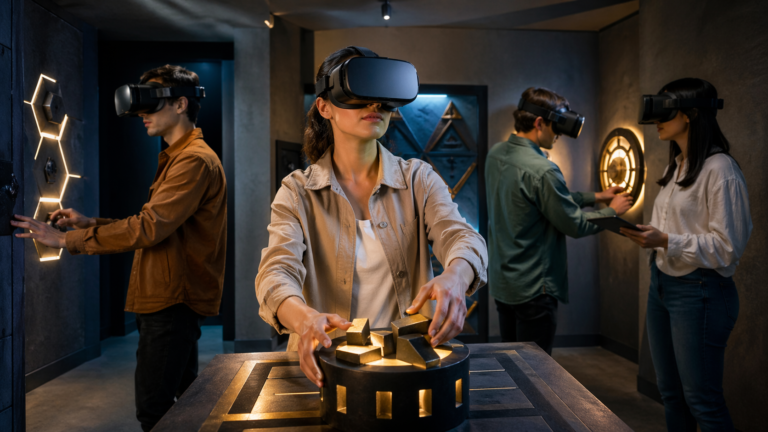
Virtual reality works best when the brain receives signals that make the world feel coherent. If you reach for a virtual object, press a button, fire a tool, or touch a surface, your body expects a response. Without that response, the environment may still look impressive, but the interaction can feel incomplete.
Haptics matter because they create a bridge between digital action and physical sensation. Even simple controller vibration can make a virtual action feel clearer and more believable. More advanced systems, such as haptic gloves or force feedback devices, can go further by simulating touch, resistance, and physical effort.
How Do Haptics in VR Work?
Haptics in VR work by translating digital events into physical signals. A controller can vibrate when a user touches a surface. A glove can add pressure when a virtual object is grasped. A force feedback system can push back when a tool meets resistance. These signals tell the user that an interaction happened, how strong it was, and sometimes even what kind of contact occurred.
The technology behind this can vary widely. Some systems use small motors that vibrate. Others use mechanical resistance, air pressure, or specialized actuators that apply force to the hands or body. The more advanced the system, the closer it can get to simulating realistic physical response.
Types of Haptics in VR Devices
1. Vibration and Tactile Feedback in Controllers
The most familiar form of VR haptics is controller vibration. When a user presses a virtual button, collides with an object, or receives an in-game signal, the controller can vibrate to create a sense of contact. This is simple, but it works because it links an action to a physical response.
Strengths
- Widely available in consumer VR systems
- Easy for users to understand immediately
- Improves clarity, timing, and immersion
Limits
- Cannot truly recreate texture or weight
- Less realistic than advanced systems
2. Haptic Gloves and Hand-Based Interaction
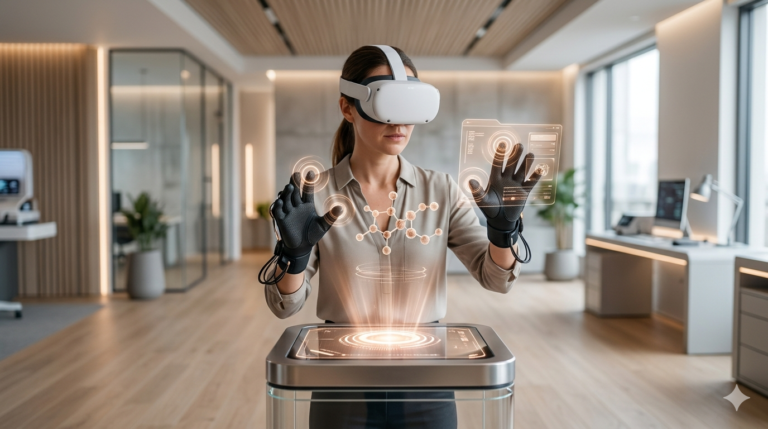
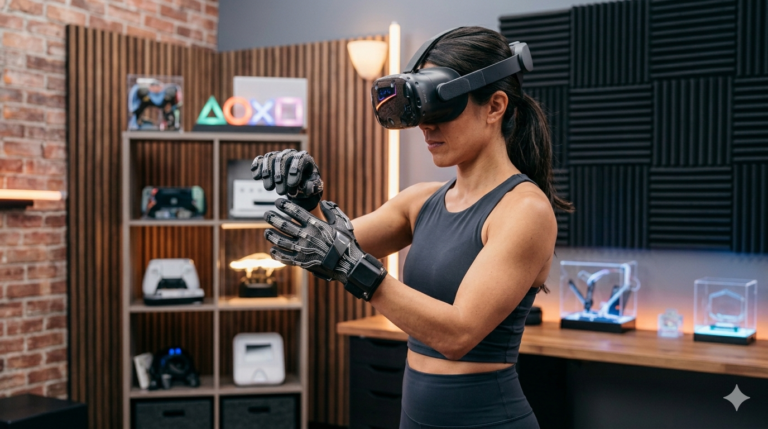
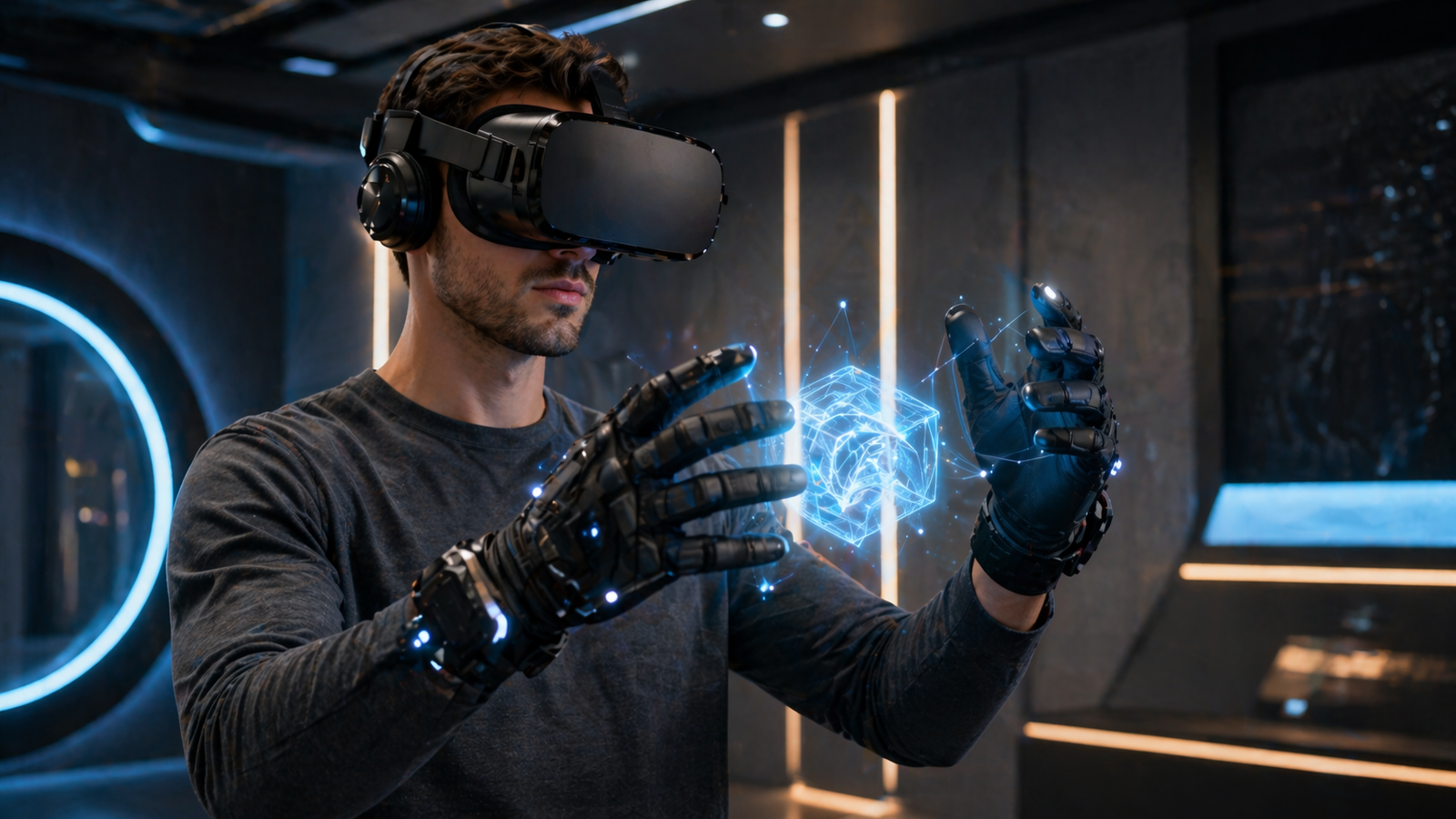
Haptic gloves track hand movement and add tactile or force cues to different parts of the hand. Instead of only feeling feedback through a controller, users can feel something closer to grasping, pressing, or resisting digital objects directly. This makes gloves especially important in training and precision-focused interaction.
Strengths
- More natural interaction for hand-based tasks
- Better fit for training and simulation
- Improves realism in object manipulation
Limits
- More expensive than controllers
- Still limited compared with real touch
3. Suits, Vests, and Body Feedback Systems
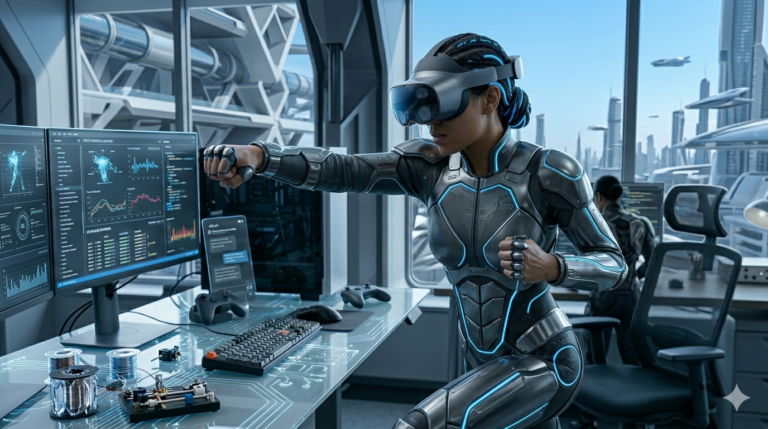
Some VR systems extend haptics beyond the hands through vests, sleeves, or full-body wearables. These systems can simulate impact, directional cues, or physical intensity in ways that support immersive gaming and professional training.
Strengths
- Extends touch feedback beyond the hands
- Useful for simulation and high-immersion scenarios
- Adds stronger body awareness in VR
Limits
- Bulkier and less practical for everyday use
- Setup complexity is higher
4. Force Feedback and Resistance Systems
Force feedback goes beyond vibration by pushing back against the user. This can simulate weight, pressure, recoil, or resistance when interacting with digital tools and objects. It is especially valuable in professional training where physical realism affects learning outcomes.
Strengths
- More realistic than vibration alone
- Useful for simulation and precision tasks
- Helps users understand effort and resistance
Limits
- Harder to build into lightweight consumer hardware
- Often costly and specialized
Where VR Haptics Are Used
VR haptics are used far beyond gaming. In training, they help users practice physical procedures more realistically. In healthcare simulation, tactile cues can support skill development. In industrial design and engineering, force feedback can help users understand tools, surfaces, and movement constraints. Even in education, simple haptic interaction can make abstract concepts feel more concrete.
Gaming remains the most visible example, but the long-term value of haptics may be even greater in professional and enterprise VR. That is because touch-based feedback can improve precision, confidence, and learning in ways that visuals alone often cannot.
How Different Types of VR Haptics Compare
Not all haptics are equally advanced. Some provide simple tactile confirmation, while others aim to simulate pressure, resistance, and physical effort. The right approach depends on the goal. Entertainment may need speed and accessibility. Training may need realism and precision.
| Haptic Type | Main Function | Best Use | Main Limitation |
|---|---|---|---|
| Controller vibration Most Common | Simple tactile signals | Gaming and general VR interaction | Limited realism |
| Haptic gloves | Hand and finger feedback | Natural object interaction | Higher cost and complexity |
| Vests and suits | Body-based impact cues | Immersive gaming and simulation | Less practical for everyday use |
| Force feedback systems | Resistance and pressure | Training and precision tasks | Specialized hardware |
How to Think About Haptics in VR
- Start by treating haptics as a communication layer, not just a special effect.
- Notice how even simple tactile feedback improves timing and clarity in VR interaction.
- See haptic gloves and force feedback as the next step toward more natural digital touch.
- Expect the strongest short-term value in training, simulation, and guided professional use.
- Remember that good haptics improve immersion only when the interaction design is already clear.
Frequently Asked Questions
What are haptics in virtual reality?
Haptics in virtual reality are touch-based signals such as vibration, pressure, resistance, or force that make digital interactions feel more physical.
What is haptic feedback in VR?
Haptic feedback in VR is the physical response you feel when interacting with a virtual object, controller, glove, or wearable system.
How do haptic gloves work in VR?
Haptic gloves track hand movement and add tactile or force cues to simulate touch, grasping, and resistance when handling virtual objects.
Why are haptics important in VR?
Haptics improve immersion, interaction clarity, training realism, and user confidence by giving physical feedback to digital actions.
Are controller vibrations a form of haptics?
Yes. Controller vibration is one of the most common and accessible forms of haptic feedback in consumer VR.
Can haptics recreate real touch perfectly?
Not yet. Current haptic systems can simulate parts of touch, but they still do not fully match the complexity of real physical sensation.
Where are VR haptics used outside gaming?
VR haptics are used in training, education, healthcare simulation, industrial design, and other professional environments where touch feedback adds value.
What is tactile feedback in VR?
Tactile feedback in VR refers to physical sensations such as vibration or pressure that help users feel contact, impact, or texture cues.
What is force feedback in VR?
Force feedback in VR is a more advanced type of haptics that pushes back against the user to simulate resistance, weight, or pressure.
Will haptics become more important in future XR devices?
Yes. As XR hardware improves, haptics are expected to play a larger role in making digital interaction feel natural, precise, and believable.