What Is a Virtual Reality Escape Room and How Does It Work
Updated 2026-04-24 by HapVR
A virtual reality escape room is an immersive puzzle experience where players wear VR headsets, enter a digital environment, solve clues, and complete objectives within a set time limit. It combines the teamwork of a traditional escape room with digital worlds and mechanics that would be difficult or impossible to build physically.
Virtual reality escape rooms sit at the intersection of immersive entertainment and cooperative puzzle solving. They keep the tension, teamwork, and countdown pressure that make escape rooms popular, but they replace the physical set with a digital world that can change shape, theme, and scale almost instantly.
That makes them appealing to players who want something more cinematic than a traditional room and more social than a solo VR game. For venues, they also offer a way to rotate themes and scenarios without rebuilding an entire physical environment every time.
If you are considering your first session, it also helps to review typical VR escape room costs, compare some beginner VR escape room games before you book, and browse the best VR games for beginners if you want easier at-home alternatives first.
For authoritative background, see Sandbox VR official site, Zero Latency official site, and Ubisoft Escape Games official site.
What Is a Virtual Reality Escape Room?
A virtual reality escape room is a timed cooperative game where players solve clues and complete tasks inside a computer-generated environment viewed through VR headsets. The objective may still be to escape, but some games use broader goals such as stopping an experiment, recovering an artifact, repairing a system, or surviving a dangerous scenario before time runs out.
The key idea is immersion. Instead of standing in a real room with physical props, players feel as if they are inside a themed digital location. That could be a space station, a laboratory, a magical fortress, or a sunken ruin. The puzzles are still central, but the setting becomes far more flexible and imaginative.
How Do VR Escape Rooms Work?
1. Headsets, Tracking, and the Digital Environment
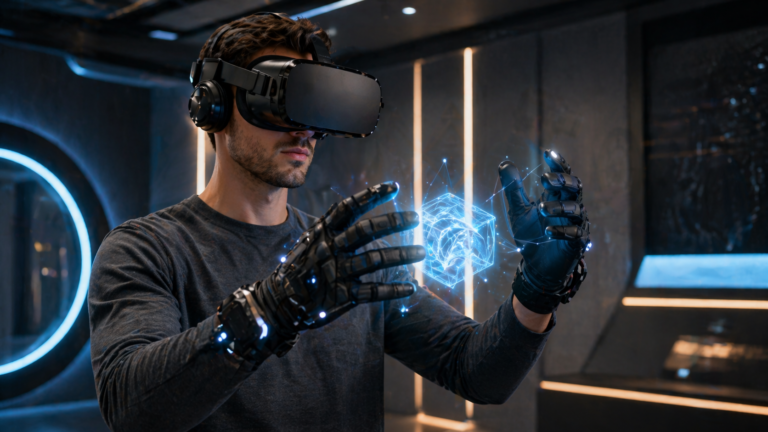
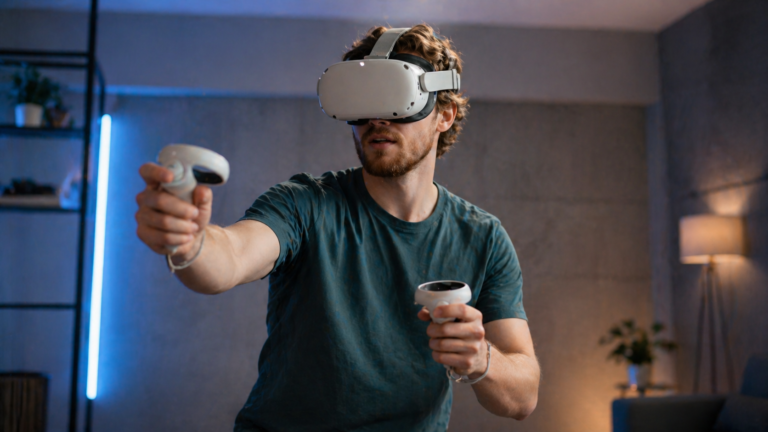
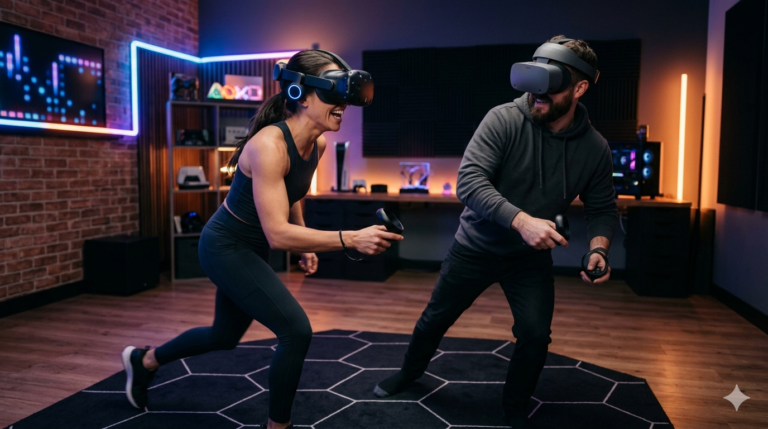
Players put on a headset that displays the virtual environment and usually hold controllers that let them grab, move, point, activate, and combine objects. Tracking keeps the world stable as players look around and interact, helping the space feel believable and responsive.
Key Benefits
- Creates stronger immersion than a standard screen-based puzzle game
- Allows venues to offer dramatic themes without building huge physical sets
- Makes object interaction feel spatial and hands-on
Limits
- New users may need a few minutes to adjust
- Comfort depends on the headset fit and game design
2. Timed Objectives, Clues, and Puzzle Progression
Each session usually follows a mission structure. Players enter the scene, discover the objective, and solve a chain of puzzles that unlock the next area, trigger a new event, or reveal the final solution. Puzzle types may include code breaking, symbol matching, mechanical sequencing, environmental observation, and object-based logic.
Key Benefits
- Feels familiar to fans of physical escape rooms
- Supports strong pacing and a clear sense of progress
- Lets designers mix logic, atmosphere, and story
Limits
- Difficulty can vary a lot between games
- Control learning can briefly slow down some teams
3. Multiplayer Communication and Shared Problem Solving
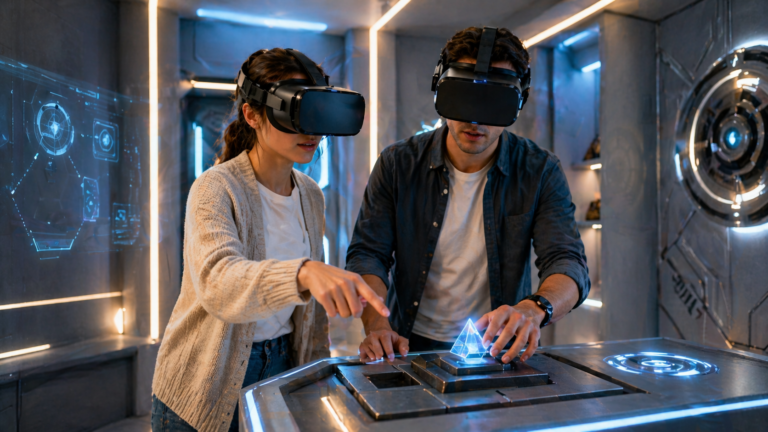
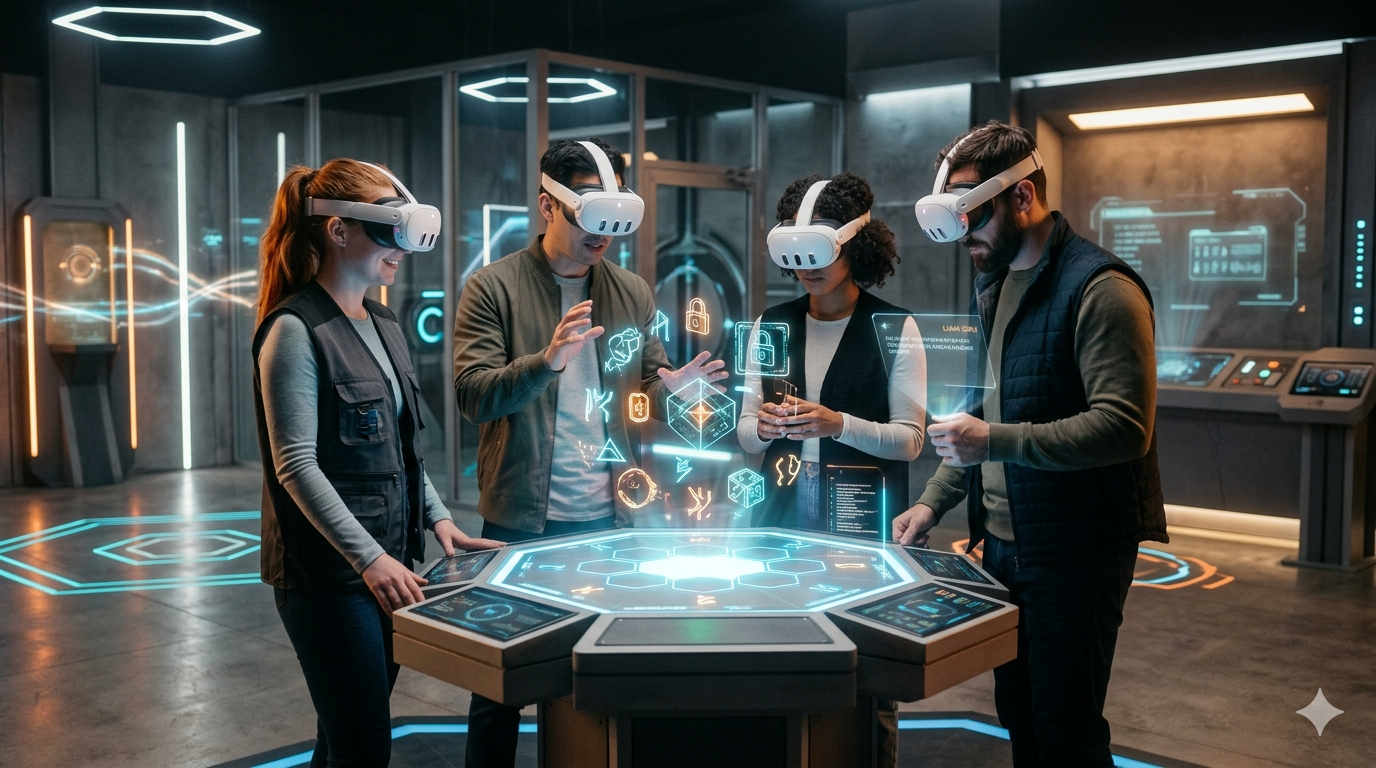
Many VR escape rooms are designed for two to four players who must talk constantly. One player may notice a hidden clue, another may operate a mechanism, and another may connect different pieces of information. That cooperative structure is one reason VR escape rooms work well for families, friend groups, and team events.
Key Benefits
- Encourages communication instead of isolated play
- Gives each player a role in the solution process
- Works well for social events and team-building
Limits
- Weak communication can slow the group down
- Mixed experience levels can affect pacing
What Players Experience
For most players, the first impression is presence. Even simple puzzle mechanics can feel more intense when they happen inside a convincing digital world. Searching a laboratory console, opening a mysterious chamber, or aligning a floating mechanism feels different in VR because you are looking around naturally instead of controlling a camera on a flat screen.
The puzzle mix often includes visual clues, timed coordination, object manipulation, pattern recognition, and environmental exploration. Some rooms focus on story and atmosphere, while others focus more heavily on logic and speed. The best experiences balance novelty with clarity so the game remains accessible even for beginners.
VR escape rooms can also feel more flexible than traditional ones. Designers can change gravity, perspective, weather, scale, or scene transitions in seconds. That gives players a stronger sense of surprise and gives venues a way to offer different worlds without changing the physical room itself.
Traditional Escape Room vs Virtual Reality Escape Room
Traditional escape rooms still offer something important: real-world props, tactile interaction, and a physical shared environment. VR escape rooms do not replace that completely. Instead, they offer a different version of the format, one that leans harder into immersion, flexibility, and digital spectacle.
The best choice depends on what your group values most. If you want physical locks, real set design, and fully real-world interaction, a traditional room may feel stronger. If you want imaginative environments, impossible scenarios, and a more futuristic experience, VR often has the advantage.
| Format | Main Experience | Best Strength | Main Tradeoff |
|---|---|---|---|
| Traditional Escape Room | Physical room with real props and locks | Tactile teamwork and real-world atmosphere | Limited by physical space and set design |
| Virtual Reality Escape Room Immersive | Digital world accessed through VR headsets | Flexible themes, cinematic moments, and impossible environments | Requires headset comfort and brief VR adjustment |
Comfort, Safety, and Beginner Questions
Most VR escape rooms are beginner-friendly, but a few practical factors still matter. Motion sensitivity varies from person to person, so some players may feel eye strain or mild discomfort if the game uses artificial movement. Well-designed experiences reduce that risk by using comfortable locomotion, slower pacing, and stable environments.
Age guidance also depends on the venue and the specific headset. Some operators recommend VR escape rooms only for older children, teenagers, or adults. The safest approach is to check the venue rules, ask about age limits, and choose a game that matches the group’s comfort level.
For new players, the best approach is simple: listen to the tutorial, adjust the headset carefully, communicate clearly, and stop if anyone feels unwell. Many people who are new to VR do well in escape room experiences because the gameplay is slower and more goal-focused than fast action games.
Future Trends in VR Escape Rooms
The future of VR escape rooms will likely involve better visuals, lighter headsets, improved hand tracking, and more natural social interaction. As hardware becomes easier to wear and more precise, designers will have more freedom to build rooms that feel intuitive even for first-time players.
We may also see stronger mixed reality crossover, where digital puzzle elements are blended with real-world props or spaces. That could create hybrid escape rooms that combine the tactile strengths of traditional rooms with the flexibility of VR. Cloud-connected multiplayer and AI-driven hint systems may also make cooperative play smoother and more adaptive.
For venues and players alike, the direction is clear: VR escape rooms are becoming less of a novelty and more of a mature entertainment format. Their long-term success will depend on comfort, accessibility, and puzzle quality, not just the technology itself.
Who Should Try a VR Escape Room
- Try one if you enjoy cooperative puzzle solving and want a more immersive setting than a traditional room.
- Try one if your group likes themed entertainment, sci-fi environments, or cinematic experiences.
- Try one if you are new to VR but want a guided, social way to experience it.
- Be cautious if you are highly sensitive to motion or uncomfortable with headsets for extended periods.
- Choose a beginner-friendly venue if your group includes first-time VR users or younger players.
Frequently Asked Questions
What is a virtual reality escape room?
A virtual reality escape room is a timed puzzle experience where players wear VR headsets, enter a digital environment, solve clues, and complete a shared objective.
How long does a VR escape room take?
Many VR escape rooms take around 30 to 60 minutes, though the full visit may be longer once setup and briefing are included.
Do you need VR experience?
No. Most commercial VR escape rooms are designed for beginners and include a short tutorial before the main experience starts.
Can VR escape rooms cause motion sickness?
They can cause discomfort for some players, but many games are designed to reduce motion issues through comfortable movement systems and slower pacing.
Are VR escape rooms good for groups?
Yes. Many are built specifically for cooperative groups, which makes them a strong option for friends, families, and team-building sessions.
Are VR escape rooms safe for kids?
That depends on the venue, the headset rules, and the game content. Some are suitable for older children, while others are better for teens and adults.
Similar Posts
What Are Haptics in Virtual Reality and Why They Matter
Haptics in virtual reality add touch, vibration, resistance, and tactile feedback to make digital experiences feel more physical, immersive, and useful.
Cheap VR Headsets Under 300 That Are Actually Worth It
Cheap VR headsets under 300 can still be worth buying if you focus on comfort, software library, and realistic value instead of chasing premium specs.
Best VR Headset for Beginners Easy Picks That Make Sense
The best VR headset for beginners usually balances comfort, setup simplicity, content quality, and price without overwhelming first-time users.
Best VR Escape Room Games for Beginners
The best VR escape room games for beginners combine clear puzzles, comfortable movement, cooperative play, and approachable difficulty without overwhelming new players.
Best Free VR Games You Can Play Right Now
The best free VR games right now include social worlds, movement-driven favorites, and replayable multiplayer picks that cost nothing to start.
How Virtual Reality Works Explained Clearly
Virtual reality works by combining a headset, sensors, motion tracking, displays, audio, and responsive software to make digital worlds feel present and interactive.