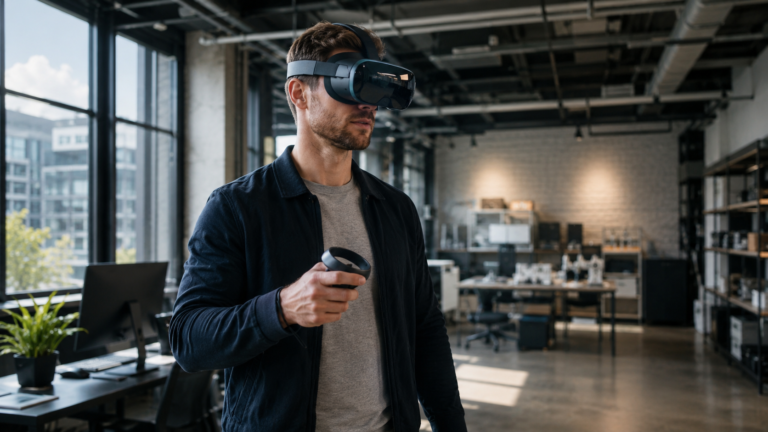

VR vs AR vs MR Differences Explained Clearly
The difference between VR vs AR vs MR is that virtual reality replaces your surroundings with a digital world, augmented reality adds digital elements to the real world, and mixed reality blends digital content with the physical world so it can stay anchored and respond more naturally to real space. If you are asking what is the difference between VR AR and MR, the shortest answer is that VR is fully immersive, AR is layered, and MR is interactive in a more spatial way.
VR vs AR vs MR can look confusing because all three use digital content, headsets, or spatial interfaces. The real difference is how much of the physical world stays in view and how digital content behaves around you. Virtual reality blocks out the real world and places you in a simulated environment. Augmented reality keeps the real world visible and adds digital layers on top. Mixed reality goes further by making digital objects feel more aware of physical space and more responsive to surfaces, distance, and movement.
Once you understand that structure, most examples become easier to sort. If a headset puts you fully inside a virtual game, that is VR. If a phone adds arrows or objects over a camera view, that is AR. If digital content appears anchored in your room and reacts more naturally to your position, that is closer to MR.
This comparison also makes more sense if you already understand what virtual reality is, how spatial reality works as the broader idea of digital content behaving within real space, and how VR can simulate touch when haptics make these systems feel more physical.
For authoritative background, see Microsoft mixed reality overview, Apple visionOS documentation, and Meta metaverse overview.
What Is the Difference Between VR AR and MR?
The simplest way to compare the three is to think about immersion, visibility, and interaction. VR focuses on full immersion. AR focuses on adding information or graphics to the real world. MR focuses on blending digital and physical space in a way that feels more connected and interactive.
That is why these terms often overlap in conversation but still matter. They describe different design goals, different hardware choices, and different user experiences. Some products can even sit between categories, especially as modern headsets borrow ideas from more than one approach.
How Virtual Reality Works
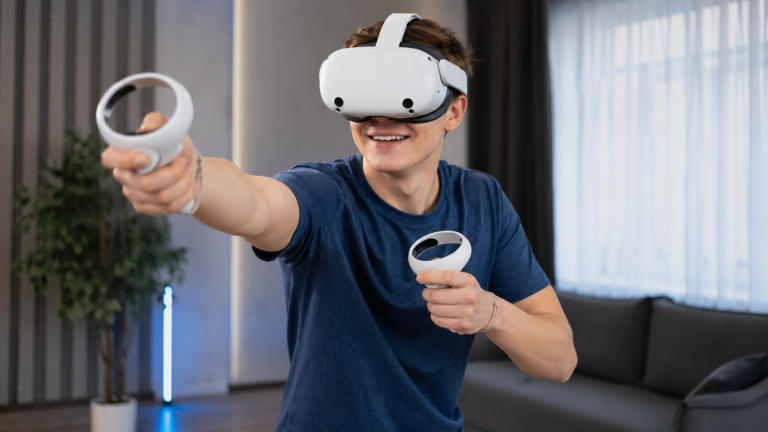
Virtual reality places the user inside a mostly digital environment. A VR headset covers your view and replaces the room around you with a computer-generated world. That makes VR the most visually immersive of the three categories, which is why it is common in gaming, simulation, training, and guided experiences.
VR works best when presence matters more than awareness of the real room. The goal is to make the experience feel convincing enough that your attention shifts away from your physical surroundings and into the digital environment itself.
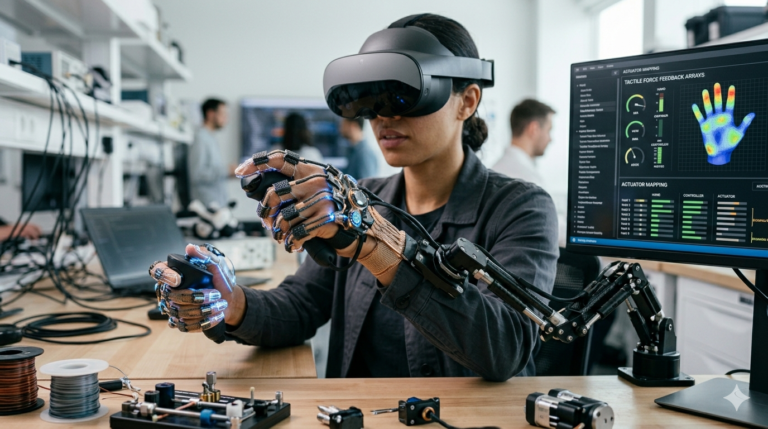
Haptics are especially relevant here because touch feedback can reinforce what the eyes already see. Controllers, wearables, and future gloves can make a virtual action feel more grounded when contact, impact, or resistance matters.
How Augmented Reality Works
Augmented reality keeps the real world visible and adds digital information on top of it. That can happen through a phone, tablet, glasses, or a lightweight headset. Instead of replacing your surroundings, AR enhances them with instructions, labels, navigation, previews, or simple interactive elements.
AR is often the most accessible category because many people already use it through mobile devices. It is useful when you want quick digital guidance without fully stepping into an immersive environment.
Because AR keeps one foot in the real world, it is often easier to use for short tasks, retail previews, navigation, and basic education or support tools.
How Mixed Reality Works
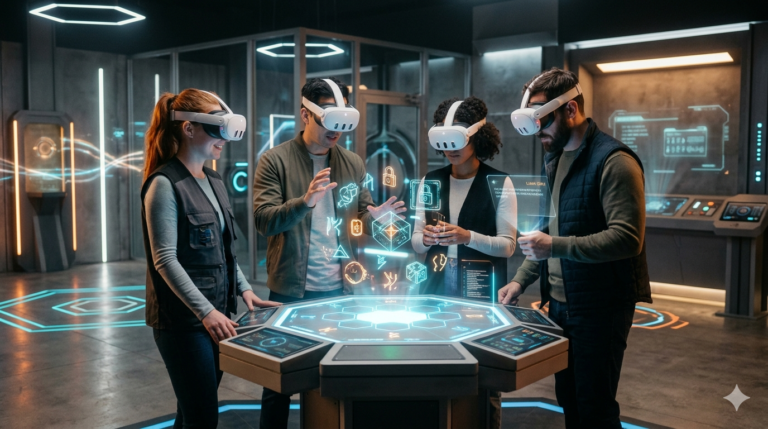
Mixed reality sits closer to spatial computing because it tries to make digital content feel aware of physical space. In MR, virtual objects can appear anchored to surfaces, hold position as you move, and behave more naturally in relation to the room around you. That is why MR is usually described as more interactive than simple overlays.
MR can feel less isolating than VR because the physical world may remain partly visible, but it can also feel more advanced than basic AR because the system understands space more deeply. This makes MR useful for collaboration, design review, training, and workspace scenarios where physical context still matters.
If you are evaluating future headsets, MR is often where the categories begin to overlap with broader spatial interfaces and work-focused immersive tools.
VR vs AR vs MR Comparison Table
A direct comparison is usually the fastest way to see how these technologies differ in practice.
| Technology | What You See | Main Strength | Best Fit |
|---|---|---|---|
| Virtual Reality Most Immersive | A fully or mostly digital environment replaces your view | Strong presence and immersion | Gaming, simulation, training, deep experiences |
| Augmented Reality | The real world with digital overlays added on top | Convenience and easy everyday use | Navigation, retail, instructions, quick visual guidance |
| Mixed Reality | The real world plus digital content anchored in space | Stronger spatial interaction | Collaboration, design, advanced training, spatial workflows |
Another useful way to think about VR vs AR vs MR is by how much attention each one gives to the physical world. VR minimizes it. AR keeps it visible. MR treats it as an active part of the experience.
Which One Makes the Most Sense?
- Choose VR when full immersion matters most.
- Choose AR when you want lightweight digital guidance on top of the real world.
- Choose MR when spatial interaction between digital content and physical space adds clear value.
- Look at the task first, then choose the technology category that fits it.
Frequently Asked Questions
What is the main difference between VR AR and MR?
VR creates a fully digital environment, AR adds digital content to the real world, and MR blends digital and physical space more interactively.
Is mixed reality the same as augmented reality?
No. Mixed reality is related to augmented reality, but it usually involves stronger spatial awareness and more natural interaction between digital content and the physical environment.
Which is more immersive VR AR or MR?
VR is usually the most immersive visually because it replaces your surroundings, while MR can feel highly interactive because digital content stays aware of the real world.
What devices are used for VR AR and MR?
VR often uses dedicated headsets, AR can use phones, tablets, or glasses, and MR usually uses advanced headsets with mapping and spatial tracking.
Where is AR most useful?
AR is especially useful for navigation, shopping previews, guided instructions, and lightweight digital overlays in everyday settings.
Where is MR most useful?
MR is most useful when digital content needs to stay anchored in real space for training, design review, collaboration, and spatial workflows.
How do haptics fit into VR AR and MR?
Haptics matter most in immersive systems where touch feedback improves realism, guidance, and confidence during interaction with digital content.