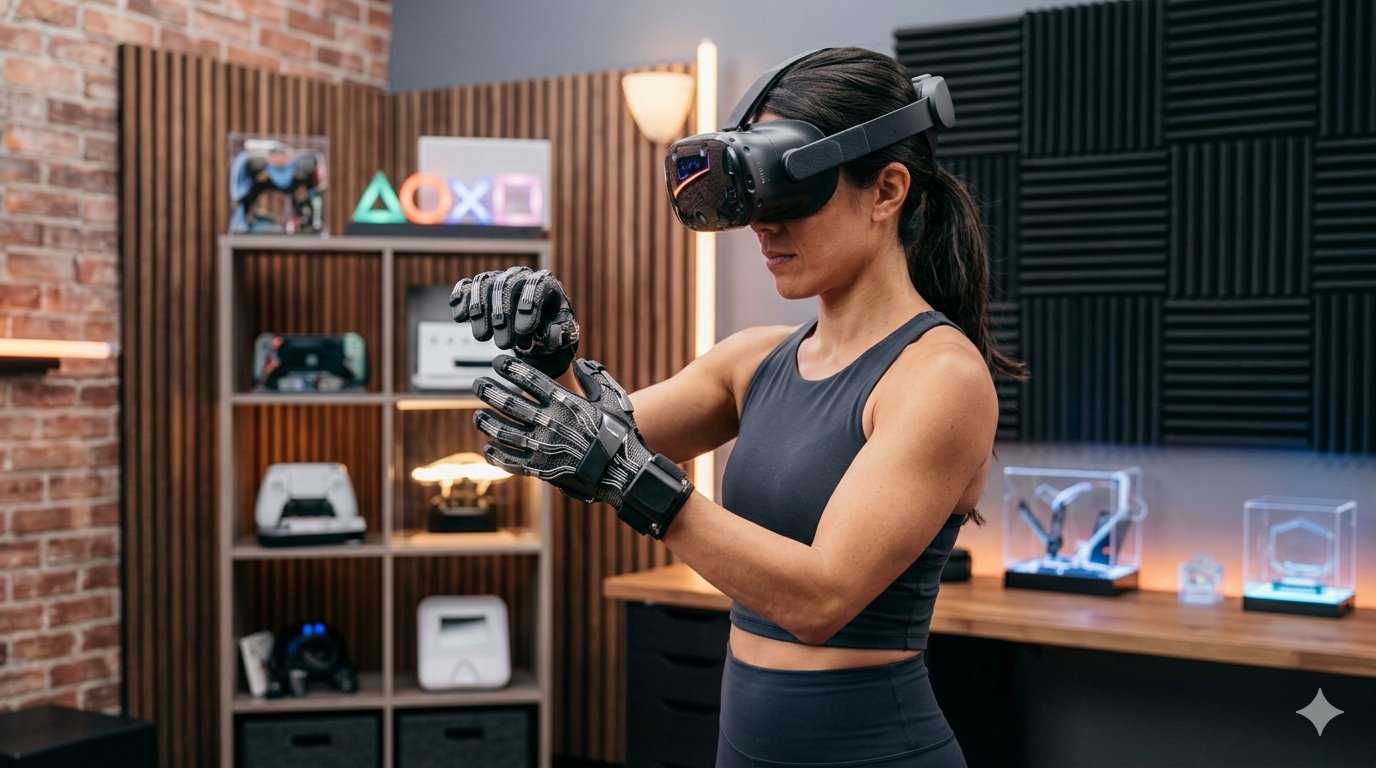
Best Haptic Gloves for VR and What They Actually Do
The best haptic gloves for VR right now are usually HaptX Gloves G1, SenseGlove Nova 2, and MANUS Metagloves Pro Haptic because each solves a different problem well. HaptX focuses on high-end tactile realism, SenseGlove balances force feedback with practical training use, and MANUS leans toward precise tracking with haptic-ready professional workflows.
The best haptic gloves VR users should care about are not the ones with the most futuristic marketing. They are the ones that actually improve touch, resistance, hand interaction, or training realism in a way standard controllers cannot. Right now, the strongest options tend to serve enterprise training, research, and advanced simulation more than everyday consumer gaming.
That matters because haptic gloves are still an emerging category. If you want the foundation first, start with what haptics in VR are, compare the broader hardware landscape through the best VR headsets, and understand how haptic feedback works before expecting every glove to feel like real skin contact.
For the bigger question about realism, it also helps to see why people ask whether VR can simulate touch at all. Haptic gloves are one of the most direct attempts to close that gap.
For official product details, compare HaptX Gloves G1, SenseGlove Nova 2, and MANUS Metagloves.
What Do Haptic Gloves Actually Do?
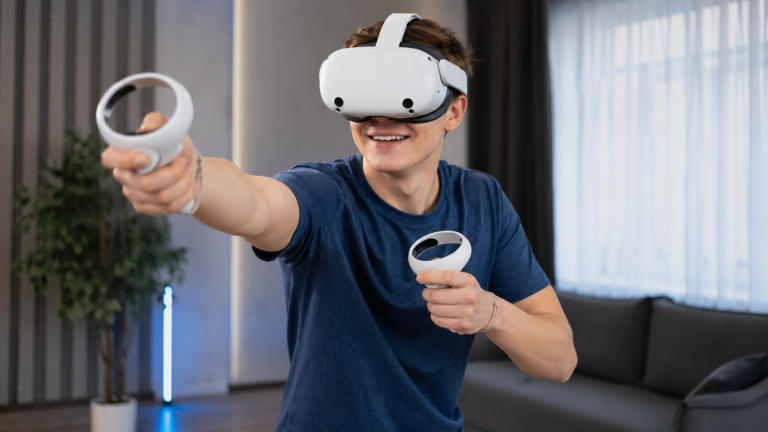
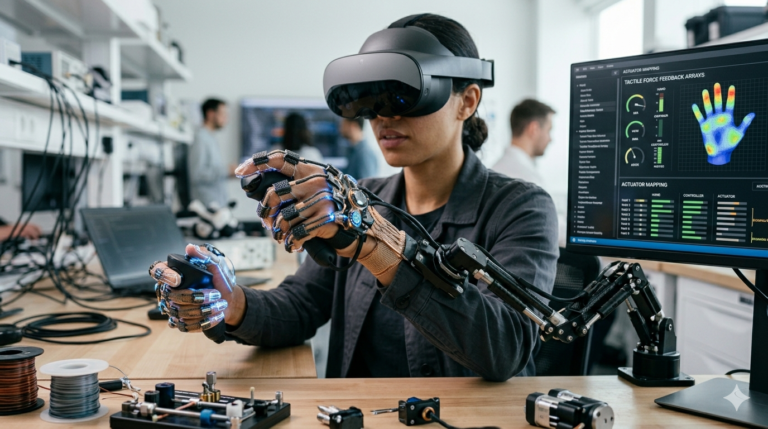
Haptic gloves try to make hand interaction in VR feel more physical. Depending on the system, they can add vibration, finger tracking, localized pressure, palm contact, or active resistance when you grab, press, or manipulate a virtual object. Some gloves focus on tactile sensation. Others focus on force feedback. A few aim to combine both with precise hand tracking.
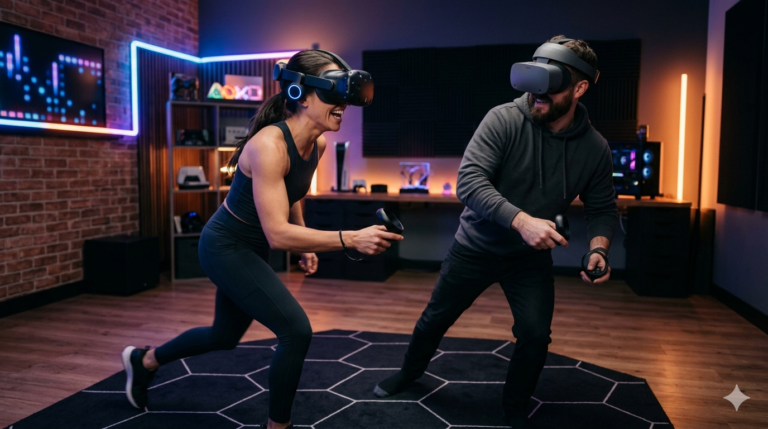
That distinction matters. A glove can look advanced and still do something very narrow. Some are better for research and robotics than immersive VR training. Some are better at finger tracking than touch realism. The real question is not whether a glove is impressive, but what kind of physical feedback it is actually built to provide.
Best Haptic Gloves for VR Right Now
- HaptX Gloves G1 for the strongest tactile and force feedback realism
- SenseGlove Nova 2 for practical XR training and compact force feedback
- MANUS Metagloves Pro Haptic for precision tracking and professional workflows
1. HaptX Gloves G1
HaptX Gloves G1 are the most impressive option here if your priority is realistic touch simulation rather than convenience. They are built around dense tactile feedback and resistive force, which makes them especially strong for high-end training and hands-on procedural simulation where touch fidelity matters.
Why It Stands Out
- Strong tactile realism compared with most glove systems
- Force feedback makes virtual objects feel more physically defined
- Fits advanced training and professional simulation well
Tradeoffs
- Bulky and specialized compared with lighter XR gloves
- Not built for mainstream consumer convenience
2. SenseGlove Nova 2
SenseGlove Nova 2 is easier to recommend when realism still matters but usability matters too. It combines force feedback, palm feedback, and vibrotactile cues in a package designed for training, research, and XR interaction that does not look as cumbersome as heavier industrial rigs.
Why It Stands Out
- Strong balance between capability and practical deployment
- Useful for training scenarios that need real hand interaction
- Wireless form factor is easier to work with than larger systems
Tradeoffs
- Still expensive and specialized compared with controllers
- Does not fully match the pure tactile realism of HaptX
3. MANUS Metagloves Pro Haptic
MANUS stands out when the workflow depends on highly reliable hand tracking and professional-grade integration. Its value is strongest in teleoperation, robotics, embodied AI, and advanced XR pipelines where hand fidelity and responsiveness matter as much as raw tactile sensation.
Why It Stands Out
- Strong fit for professional hand-data and teleoperation workflows
- High-value option when tracking quality matters as much as haptics
- Good bridge between XR interaction and robotics-oriented use
Tradeoffs
- Less obviously consumer-facing than entertainment-focused VR gear
- Its appeal depends heavily on professional use cases
How Should You Choose a VR Haptic Glove?
Choose based on what you need to feel, not what you want to imagine. If your work depends on convincing tactile realism, prioritize touch quality and force feedback. If deployment speed and training usability matter more, look for gloves that are easier to set up and integrate. If your use case leans toward teleoperation or robotic control, tracking reliability may matter more than cinematic immersion.
Budget also matters more here than in normal headset shopping. Haptic gloves are still a specialized hardware category, so the best buying decision often comes from matching the glove to one serious use case rather than expecting one product to be perfect for every kind of VR interaction.
How the Leading VR Haptic Gloves Compare
The main difference between these systems is not just quality. It is focus. One system is built to maximize realistic touch, another balances realism with deployment practicality, and another leans into professional hand-tracking workflows where haptics support a larger XR or robotics pipeline.
| Glove System | Best For | Main Strength | Main Limitation |
|---|---|---|---|
| HaptX Gloves G1 Top Pick | High-end realism | Strong tactile plus force feedback | Bulkier enterprise setup |
| SenseGlove Nova 2 | XR training teams | Good force feedback in a more practical form | Still expensive and specialized |
| MANUS Metagloves Pro Haptic | Research and teleoperation | Professional precision and workflow integration | Less consumer-oriented value |
Best Way to Think About VR Haptic Gloves
- Pick HaptX if your top priority is realistic touch and force feedback.
- Pick SenseGlove if you want a stronger balance between capability and practical XR training use.
- Pick MANUS if your workflow values hand precision, professional integration, or robotics crossover.
- Do not expect current gloves to replace every controller use case yet.
- Treat haptic gloves as specialized tools first and broad consumer products second.
Are Haptic Gloves Worth It Yet?
Yes, for the right user. They are already worth it in enterprise training, simulation, research, robotics, and advanced XR development where better touch feedback improves outcomes or task realism. They are much less obviously worth it for casual home users who mainly want a cheaper or simpler gaming upgrade.
That is the clearest way to understand the current market. Haptic gloves are real, useful, and impressive, but they are still closer to advanced tools than everyday mainstream VR accessories.
Frequently Asked Questions
What are the best haptic gloves for VR right now?
Some of the strongest haptic glove options right now are HaptX Gloves G1, SenseGlove Nova 2, and MANUS Metagloves Pro Haptic because they each serve different high-value VR use cases well.
Do haptic gloves actually let you feel virtual objects?
They can simulate parts of that experience, such as pressure, vibration, grasp resistance, or palm contact, but they still do not recreate full real-world touch perfectly.
Are VR haptic gloves mostly for gaming?
Not right now. The strongest current use cases are training, simulation, research, teleoperation, and professional XR interaction rather than mainstream casual gaming.
What is the difference between haptic gloves and normal VR controllers?
VR controllers mostly provide broad vibration through the hands, while haptic gloves aim to add more direct hand-based feedback such as finger cues, resistance, or simulated contact.
Which VR haptic glove is best for realism?
HaptX Gloves G1 are often treated as one of the strongest realism-focused options because they combine detailed tactile feedback with resistive force feedback.
Which haptic gloves are best for XR training?
SenseGlove Nova 2 are a strong choice for XR training because they balance force feedback, practical deployment, and hand interaction in a more usable form factor.
Are haptic gloves worth buying for home VR users?
Usually only if you have a very specific interest or budget. For most home users, current haptic gloves are still more specialized and expensive than mainstream headset accessories.
Will haptic gloves become more common in future VR systems?
Probably yes, but the path will likely be gradual. As XR hardware improves, lighter and more practical hand-feedback systems may become more common across training and consumer devices.